
Desert Village
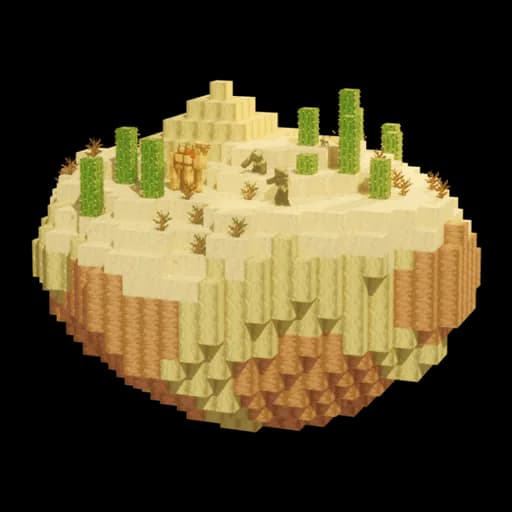
Desert Village is a generated structure in Minecraft. It is home to Villager, Iron Golem, Cat, and Camel. Its chests can contain Wheat, Bread, Cactus, Dead Bush, and Emerald.
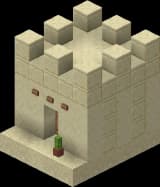
Desert villages generate in desert biomes and are built almost entirely from sandstone, smooth and chiseled sandstone, and orange terracotta, with flat roofs suited to the arid climate. Their villagers wear the desert biome outfit.
A desert village can include an armorer, butcher, cartographer, fletcher, mason, shepherd, leatherworker, toolsmith, and weaponsmith, patrolled by iron golems and cats. The separate desert pyramid is a different structure and is not part of the village.
House chests frequently hold wheat, bread, and cactus, with rarer dead bushes, emeralds, books, clay, and green dye.
Desert Village FAQ
Quick answers
The fastest way is to enter your world seed into the interactive seed-map finder on this page, which plots the exact coordinates of every Desert Village so you can travel straight to one. In-game on Java Edition you can also run the command /locate structure minecraft:village_desert to get the nearest village's coordinates.
Desert Villages only generate in desert biomes, where their buildings are made of sandstone and smooth sandstone. Villages are fairly common but spread out: in Java Edition they use an average spacing of about 34 chunks (roughly 544 blocks) with a minimum of 8 chunks between attempts, so you often have to travel before finding one in a desert.
A Desert Village can include houses, farms, a well, and profession buildings like the weaponsmith, toolsmith, and armorer, plus a small temple that serves as the cleric's job site and, uniquely among village variants, generates with a loot chest. Because there is no natural water, crops do not grow easily, and desert house chests are notable for carrying items like cactus and dead bushes.